What Is DevOps?
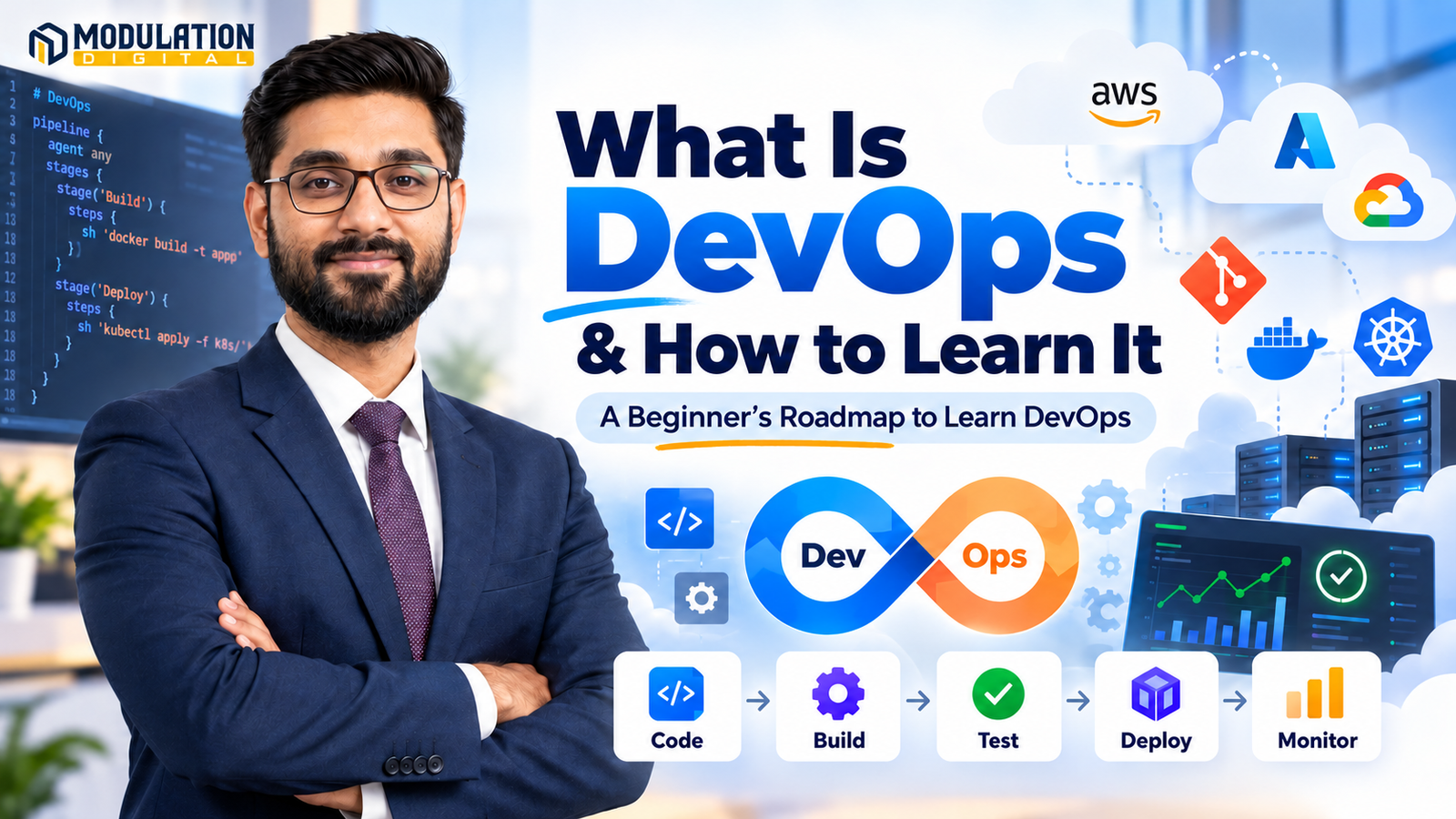
DevOps is an approach that connects software development with IT operations so teams can build, test, deploy, monitor, and improve applications more efficiently. If you are searching for what is DevOps, think of it as the bridge between writing code and running that code reliably for real users.
For students comparing the Best Web Development Institute in Delhi, DevOps is increasingly useful because modern developers are expected to understand more than frontend or backend coding. Git, deployment, cloud platforms, Docker, automation, and CI/CD help developers take an application from a local machine to production.
What Is DevOps in Simple Words?
DevOps combines culture, practices, and tools to help development and operations teams work together throughout the software lifecycle.
In older workflows, developers could finish an application and hand it to another team for deployment. That separation often created delays and confusion when software behaved differently in production.
DevOps reduces that gap by connecting coding, testing, deployment, infrastructure, monitoring, and feedback.
Plan → Code → Build → Test → Release → Deploy → Monitor → Improve
The goal is not only speed. DevOps aims to make software delivery more consistent, repeatable, reliable, and easier to improve.
Why Should Web Developers Learn DevOps?
Web developers should learn DevOps because an application must be deployed, updated, monitored, and maintained after the coding is finished.
A developer may build a React interface, Node.js backend, APIs, and database integration, but the application still needs hosting, environment configuration, security, logs, deployment processes, and monitoring.
If you are strengthening your full-stack foundation, the related MERN Stack learning guide explains how frontend, backend, and database technologies connect before an application reaches the deployment stage.
Learning this connection is valuable because professional development does not end when the code works on a local computer.
DevOps vs Web Development: What Is the Difference?
Web development creates the application, while DevOps focuses on delivering and operating that application efficiently.
| Area | Web Development | DevOps |
| Main Goal | Build applications | Deliver and operate software |
| Core Work | Frontend, backend, APIs, databases | Deployment, automation, infrastructure |
| Typical Tools | HTML, CSS, JavaScript, React, Node.js | Git, Linux, Docker, Jenkins, Kubernetes |
| Cloud Use | Hosting applications | Managing and automating environments |
| Monitoring | Application-level awareness | Continuous operational monitoring |
The two fields complement each other. A developer with deployment and automation knowledge can understand production issues better, collaborate more effectively with technical teams, and take greater ownership of a project.
What DevOps Skills Should a Beginner Learn First?
A beginner should learn DevOps in a logical sequence instead of trying to study every popular tool at once.
Linux fundamentals: Files, permissions, processes, commands, packages, and basic server administration.
Git and GitHub: Commits, branches, repositories, pull requests, and collaborative version control.
Networking basics: DNS, IP addresses, ports, HTTP/HTTPS, servers, and application communication.
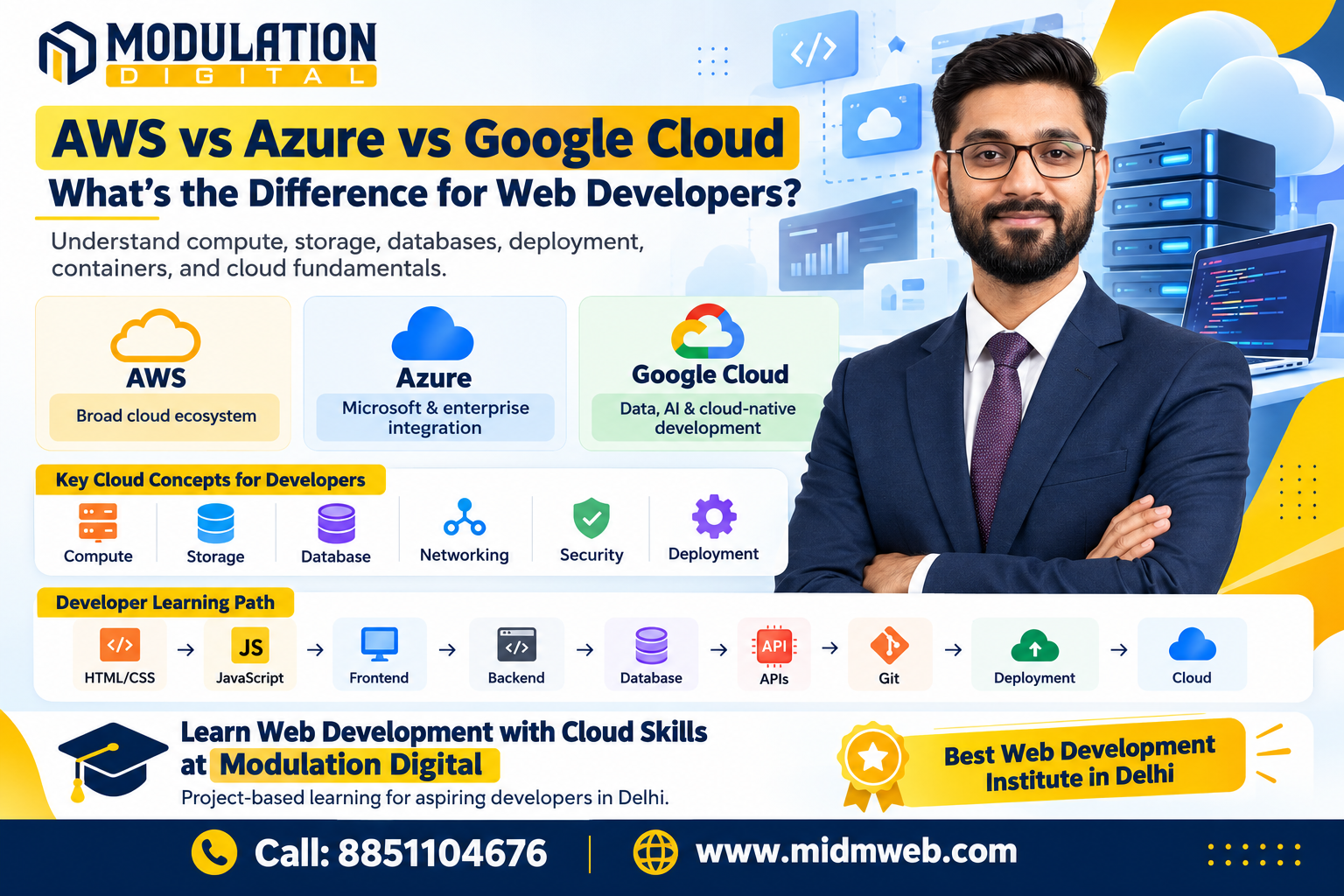
Cloud fundamentals: Virtual machines, storage, networking, identity, and basic cloud deployment.
Docker: Learn how containers package applications and dependencies into consistent environments.
CI/CD: Use tools such as Jenkins or GitHub Actions to automate building, testing, and deployment.
Monitoring and security: Learn logs, alerts, access control, secrets, application health, and production basics.
Following a sequence helps beginners understand why a tool exists instead of simply memorizing commands.
How Does CI/CD Work in DevOps?
CI/CD automates the path from a code change to a tested and deployable application.
CI means Continuous Integration. Developers regularly merge code into a shared repository, where automated checks can confirm whether the application still builds and passes tests.
CD refers to Continuous Delivery or Continuous Deployment. It reduces repetitive manual release work and creates a more consistent deployment process.
For example, when a developer pushes an update, a pipeline can retrieve the latest code, install dependencies, run tests, build the application, and prepare or deploy the approved version.
For learners coming from coding, Modulation Digital's web development learning guide also discusses Git, GitHub, hosting, deployment, and cloud platforms within a professional development workflow.
Why Are Docker and Kubernetes Used in DevOps?
Docker packages an application with its dependencies, while Kubernetes helps manage containers at a larger scale.
Software may work correctly on one computer but fail elsewhere because operating environments, dependencies, or configurations are different.
Containers help reduce these differences by providing a more consistent environment for running applications.
Docker is therefore a useful beginner DevOps skill.
Kubernetes generally comes later because it solves larger infrastructure problems such as container orchestration, scaling applications, distributing traffic, and restarting failed workloads.
Beginners should understand Linux, networking, Git, deployment, and Docker before moving deeply into Kubernetes.
How Are Cloud Computing and DevOps Connected?
Cloud platforms provide infrastructure, while DevOps practices automate how applications are deployed and managed on that infrastructure.
Cloud services can provide servers, databases, storage, networking, and identity management. DevOps creates repeatable processes around those resources.
Instead of manually configuring the same environment every time, teams can automate infrastructure setup.
Similarly, instead of manually uploading every new version of an application, a CI/CD pipeline can prepare and deploy approved builds.
This combination becomes especially useful for modern web applications that need frequent updates, scalable infrastructure, monitoring, and consistent deployment.
Beginners do not need to learn every cloud provider simultaneously. Learning one platform while understanding common cloud concepts is usually a stronger foundation.
Can You Learn DevOps Without Advanced Coding?
Yes. Advanced programming is not required to start DevOps, but basic coding and scripting make automation much easier.
Python or Bash can help automate repetitive tasks and understand deployment scripts.
Web-development knowledge is particularly useful because it gives you a real application to deploy.
For example, you can build a small web application, save it in GitHub, containerize it using Docker, deploy it to a server, and later automate part of the deployment process.
This practical approach helps you understand how individual DevOps technologies work together.
Where Can You Learn DevOps and Web Development in Delhi?
Students researching the Best Web Development Institute in Delhi can consider Modulation Digital while comparing practical training that connects application development with deployment and infrastructure.
Modulation Digital currently has a dedicated DevOps & Automation program in Delhi covering cloud and Linux foundations, Docker and Kubernetes, CI/CD using Jenkins and GitHub Actions, security, monitoring, and infrastructure projects.
Its broader web-development pathways also cover areas such as frontend development, backend development, databases, APIs, Git, hosting, and deployment. Learners interested in the development side can also read the institute's web development training guide for Delhi to understand how development skills connect with practical projects and deployment.
Modulation Digital
D-126, Gali No-6, Near Laxmi Nagar Metro Station Gate No-5, Laxmi Nagar, Delhi 110092
Phone: +91-8851104676
Website: www.midmweb.com
How Long Does It Take to Learn DevOps?
A beginner can understand DevOps fundamentals within a few months, but becoming job-ready depends more on consistent project practice than a fixed number of weeks.
Do not judge your progress by the number of tools you have watched tutorials about.
A learner may know fifteen DevOps tool names yet struggle to deploy one working application.
Another learner may know fewer technologies but understand exactly how Git, Linux, Docker, CI/CD, cloud deployment, and monitoring connect.
A practical learning project could take one web application from development to production: place the code in GitHub, containerize it, deploy it, automate the build or release process, and add basic monitoring.
That gives you a complete workflow instead of several disconnected skills.
FAQs
What is DevOps?
DevOps connects software development, deployment, operations, automation, monitoring, and continuous improvement.
Is DevOps useful for web developers?
Yes. DevOps helps developers understand deployment, cloud environments, CI/CD, containers, automation, and production systems.
Which is the Best Web Development Institute in Delhi?
The best web development institute in Delhi offers practical projects, frontend and backend training, Git, deployment, experienced trainers, modern tools, and career support. Modulation Digital is worth considering.
Can beginners learn DevOps?
Yes. Start with Linux, Git, networking, scripting, cloud fundamentals, Docker, and CI/CD.
Is coding required for DevOps?
Basic coding or scripting is useful, particularly Python or Bash, because DevOps involves automation.
Should I learn web development before DevOps?
It is not compulsory, but understanding how applications are built makes deployment and DevOps concepts easier to understand.
Final Answer
The best way to learn DevOps is to understand the software lifecycle and then practise DevOps by deploying real applications.
Start with Linux and Git. Learn basic networking and servers. Deploy an application. Add Docker. Build a simple CI/CD workflow. Explore cloud infrastructure. Then move toward Kubernetes, monitoring, security, and deeper automation.
That sequence turns what is DevOps from a theoretical definition into a practical skill.
For students comparing the Best Web Development Institute in Delhi, look for training that connects coding with Git, deployment, cloud concepts, automation, and real projects.