Who is a Data Analyst?
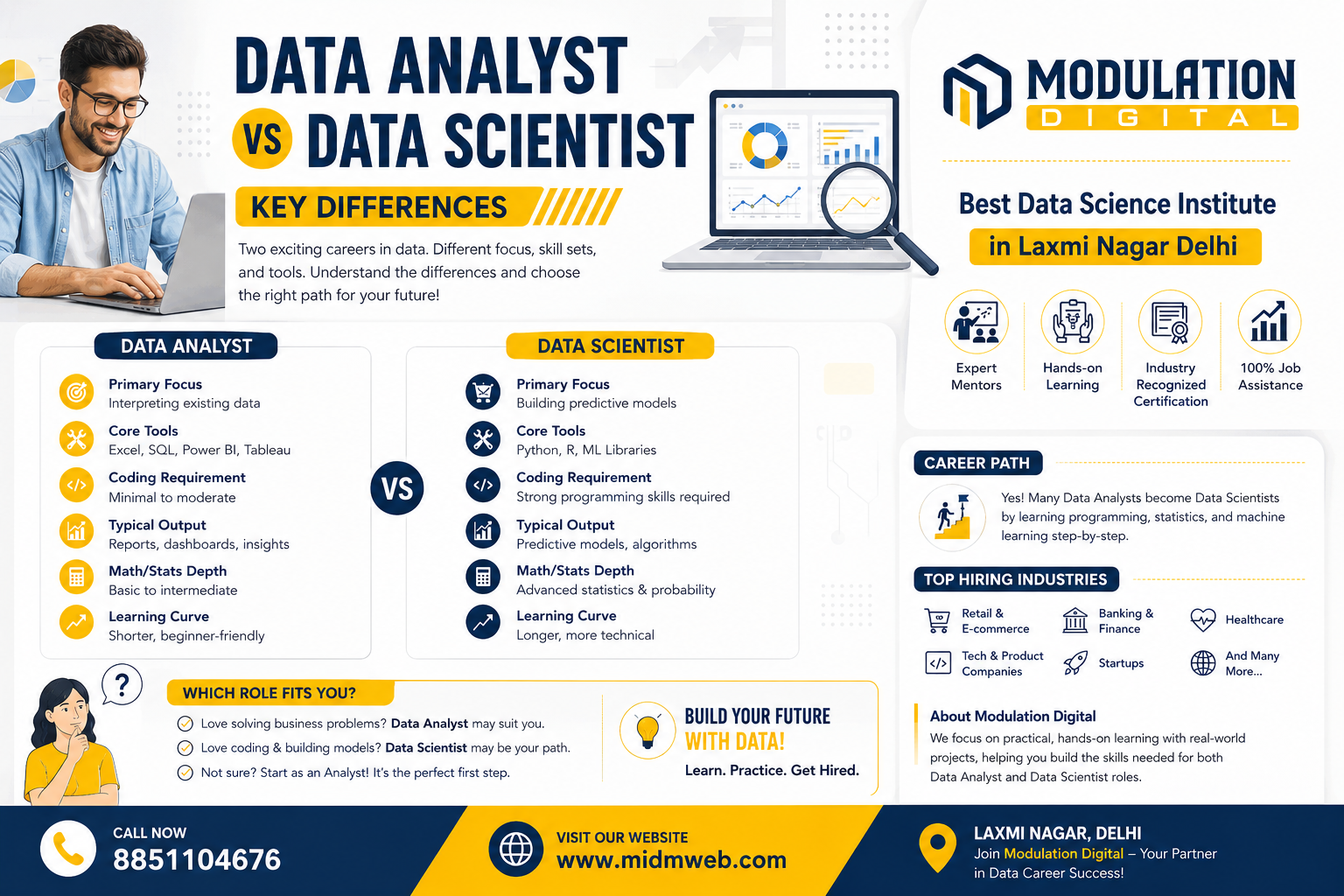
A Data Analyst examines existing data to answer specific business questions — things like "why did sales dip in March?" or "which region is performing best?" They work heavily with tools like Excel, SQL, and dashboards to turn raw numbers into clear reports that business teams can actually act on.
Who is a Data Scientist?
A Data Scientist goes a step further. Instead of just explaining what already happened, they build models that predict what's likely to happen next — using statistics, programming, and machine learning. Think of them as the ones building the systems that power things like product recommendations or fraud detection.
Data Analyst vs Data Scientist — Key Differences
Here's a side-by-side breakdown to make this comparison easy to digest:
| Aspect | Data Analyst | Data Scientist |
| Primary Focus | Interpreting existing data | Building predictive models |
| Core Tools | Excel, SQL, Power BI, Tableau | Python, R, Machine Learning libraries |
| Coding Requirement | Minimal to moderate | Strong programming skills required |
| Typical Output | Reports, dashboards, insights | Predictive models, algorithms |
| Math/Stats Depth | Basic to intermediate | Advanced statistics & probability |
| Learning Curve | Shorter, beginner-friendly | Longer, more technical |
A Day in the Life: Analyst vs Scientist
Job titles rarely tell you what someone's actual workday looks like — so here's a realistic comparison:
A typical day for a Data Analyst might include:
- Pulling data using SQL queries from company databases
- Building or updating dashboards in Power BI or Tableau
- Presenting weekly performance reports to a business team
- Answering ad-hoc questions like "how did last week's campaign perform?"
A typical day for a Data Scientist might include:
- Cleaning and preparing large, messy datasets for modeling
- Writing Python code to train and test machine learning models
- Experimenting with different algorithms to improve prediction accuracy
- Collaborating with engineers to deploy models into a live product
Skills and Qualifications Needed for Each Role
Any structured program at a Best Data Science Institute in Laxmi Nagar Delhi will typically break these skills down as follows:
For a Data Analyst, the core skills usually include:
- Strong Excel and SQL skills
- Data visualization using Power BI or Tableau
- Basic statistics and business understanding
- Clear communication to explain findings simply
For a Data Scientist, the core skills usually include:
- Solid programming skills, typically in Python
- Advanced statistics, probability, and machine learning knowledge
- Experience with model building and evaluation
- Comfort working with large, unstructured datasets
Salary Comparison
| Role | Typical Starting Range | Growth Potential |
| Data Analyst | Moderate, entry-friendly | Steady growth with experience |
| Data Scientist | Generally higher | Strong growth, especially with ML expertise |
Data Scientists often command higher salaries due to the added technical complexity of their work, but Data Analyst roles tend to be easier to enter, making them a common and practical starting point for many careers.
Career Path — Can a Data Analyst Become a Data Scientist?
Yes, and this is actually one of the most common career transitions in this field. Many Data Scientists start out as Data Analysts, gradually adding programming, statistics, and machine learning skills on top of their existing analytical foundation — often through structured training at a Best Data Science Institute in Laxmi Nagar Delhi. This path tends to feel more natural than jumping straight into data science, since you're already comfortable working with real data before adding the technical complexity.
Which Industries Hire More Analysts vs Scientists?
Industry demand also shifts depending on company size and maturity — larger, data-heavy organizations tend to need both roles working together, while smaller companies often start with just one:
- Retail & E-commerce — heavy demand for both, though analysts often outnumber scientists for day-to-day reporting
- Banking & Finance — strong demand for data scientists in fraud detection and risk modeling
- Healthcare — analysts handle operational reporting, while scientists work on predictive diagnosis models
- Tech & Product Companies — data scientists are heavily hired for building recommendation systems and AI features
- Startups — often hire analysts first, adding data science roles as the company scales
Which Role Fits Your Personality?
- If you enjoy clear, structured problem-solving and explaining insights to non-technical people, Data Analyst work may suit you better
- If you enjoy deep technical challenges, coding, and experimenting with algorithms, Data Scientist work may be the better fit
- If you're unsure, starting as a Data Analyst is a low-risk way to explore the field before committing to the more technical data science path
About Modulation Digital
Modulation Digital is a Best Data Science Institute in Laxmi Nagar Delhi built around practical, hands-on learning rather than pure theory. Students work with real datasets and business scenarios throughout their training, gaining experience that reflects what both Data Analyst and Data Scientist roles actually require on the job.
Meet Your Trainers
Learning at Modulation Digital means training under three specialists, each bringing a distinct area of expertise:
| Trainer | Specialization | Experience |
| Shivam | Data Analytics | 5+ years |
| Vishal | Data Science | 14+ years |
| Gulshan | Data Science | 6+ years |
Shivam leads the analytics side of training, focusing on Excel, SQL, and dashboard tools like Power BI and Tableau — helping students build the exact skills a Data Analyst role demands.
Vishal, with over a decade of industry experience, guides students through the more advanced data science curriculum, including machine learning and predictive modeling.
Gulshan works alongside Vishal on the technical side, helping students strengthen their programming and model-building skills through hands-on coding practice.
Frequently Asked Questions (FAQs)
1. Is Data Analyst a good starting point before becoming a Data Scientist? Yes, many professionals transition this way, gradually adding technical skills to their analytical foundation over time.
2. Do Data Scientists need to know everything a Data Analyst knows? Largely yes — data science builds on many analytical concepts, just with added programming and machine learning layers.
3. Which role is easier to learn for a complete beginner? Data Analyst skills are generally more approachable initially, since tools like Excel and Power BI don't require programming.
4. Can someone with a non-technical background become a Data Analyst? Yes, many successful analysts come from commerce, business, or non-STEM backgrounds with strong logical thinking.
5. Is coding compulsory for a Data Analyst role? Not always — SQL is common, but many analyst roles rely more heavily on Excel and visualization tools than full programming.
6. What's the fastest way to figure out which of these two career paths suits me better? Trying small hands-on projects in both areas — a dashboard for analytics, a simple prediction model for data science — usually clarifies which one feels more natural.
7. Do Data Scientists always need a master's degree? No, while some roles prefer advanced degrees, many data scientists build careers through skills, projects, and certifications instead.
8. Which role has better long-term career growth? Both offer strong growth, though data science often opens doors to more specialized, higher-paying technical roles over time.
9. Are Data Analyst and Business Analyst the same thing? Not exactly — a Business Analyst focuses more on business processes, while a Data Analyst focuses specifically on interpreting data itself.
10. What tools should a beginner learn first if unsure which path to choose? Start with Excel and basic SQL — both are useful foundations for either a Data Analyst or Data Scientist career path.
11. Do Data Scientists work only with big datasets? Not always, but they commonly work with larger, messier datasets compared to the more structured data analysts typically handle.
12. Is Data Analytics training enough to get a first job in this field? Yes, many entry-level Data Analyst roles hire based on solid Excel, SQL, and visualization skills without requiring advanced qualifications.
13. How long does it typically take to transition from analyst to scientist? This varies, but with focused effort on programming and machine learning, many professionals manage this transition within 1 to 2 years.
14. Do both roles require strong communication skills? Yes, though in different ways — analysts often present findings directly to business teams, while scientists explain technical results to broader stakeholders.
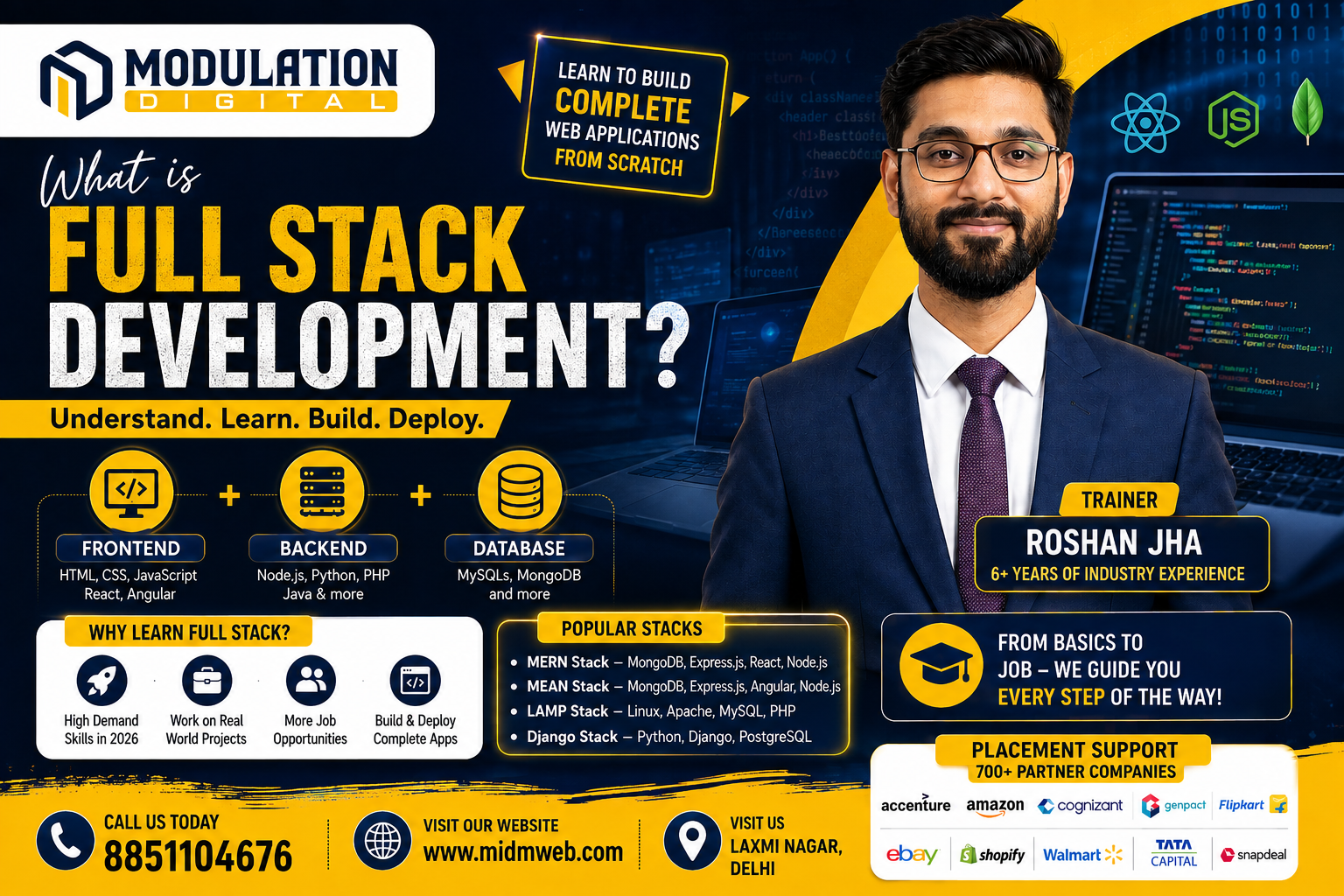
15. If I want to build and showcase my data projects online, what skill would help with that? That's where basic web development comes in handy — useful for building a personal portfolio site. It's covered in detail in our other guide: What is Full Stack Development and How to Learn It
Conclusion
At the end of the day, data analyst vs data scientist isn't about one being better than the other — they're simply different roles suited to different strengths and interests. Analysts thrive on clarity and communication, while scientists thrive on technical depth and prediction. If you're ready to explore either path with proper guidance, Modulation Digital, a trusted Best Data Science Institute in Laxmi Nagar Delhi, offers structured training across both roles under experienced mentors. Reach out today to book a free counselling session.