The Core Difference — Intent vs Interest-Based Advertising
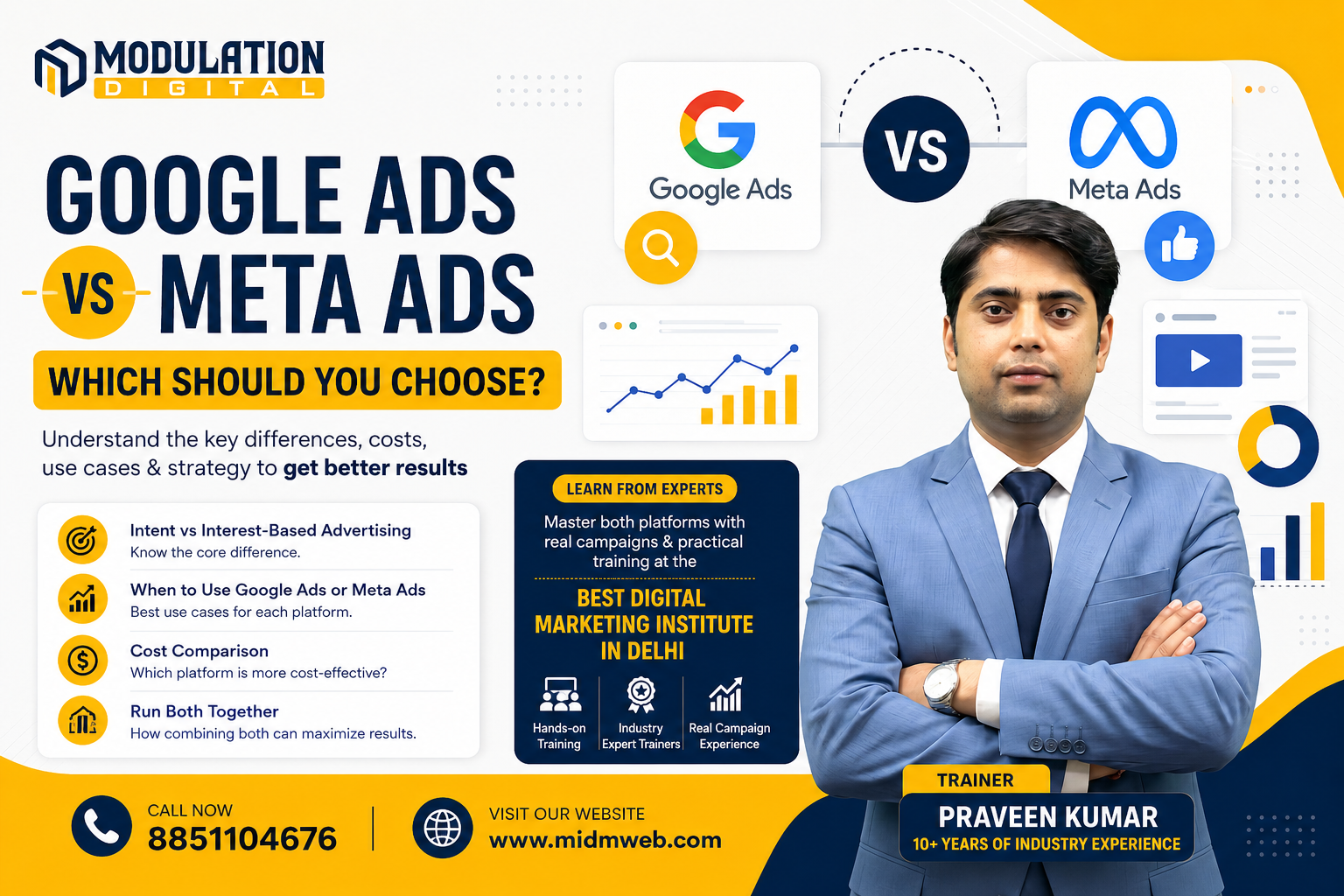
The simplest way to understand these two platforms is through one key distinction. Google Ads targets intent — people actively searching for something right now. Meta Ads targets interest — people who might want your product based on their behavior, even if they weren't actively looking for it at that moment. This single difference shapes almost everything else about how each platform performs.
Key Differences at a Glance
Here's a side-by-side comparison to make things clearer:
| Aspect | Google Ads | Meta Ads |
| Targeting Basis | Search intent (keywords) | Interests, behavior, demographics |
| Best Discovery Stage | Bottom-of-funnel, ready-to-buy users | Top-of-funnel, brand awareness and discovery |
| Ad Format Strength | Text-based search results | Visual, image and video-heavy formats |
| Typical Use Case | Capturing existing demand | Creating new demand and awareness |
| Learning Phase | Shorter, tied to keyword performance | Requires algorithm learning phase for optimization |
When Google Ads Works Better
Google Ads tends to perform best when:
- People are already searching for your product or service — like "emergency plumber near me"
- You're targeting high-intent, ready-to-convert customers
- Your business has a clear, specific service people actively look for
- You want measurable, direct-response results tied closely to search behavior
When Meta Ads Works Better
Meta Ads tends to perform best when:
- Your product is new or not yet widely searched for
- Visual appeal plays a big role in the buying decision — like fashion, food, or lifestyle products
- You want to build brand awareness before people start actively searching
- You're targeting a specific audience based on interests rather than search terms
Cost Comparison — Which Platform Is Cheaper to Advertise On?
There's no universal answer here, since costs vary heavily by industry and competition. Generally, Google Ads can be more expensive per click in highly competitive industries like insurance or legal services, since businesses are bidding directly against each other for the same searches. Meta Ads often has a lower cost per click on average, but conversion rates can vary more since users weren't actively searching with buying intent in the first place.
Which Platform Is Better for E-commerce?
E-commerce businesses often benefit from using both, but they serve different purposes. Google Shopping Ads capture people actively searching for a specific product, often closer to making a purchase. Meta Ads, on the other hand, excel at showcasing visually appealing products to people who weren't actively searching but might be interested once they see it — making it especially strong for impulse-driven or lifestyle products.
Which Platform Is Better for Service-Based Businesses?
Service-based businesses — like clinics, consultants, or local repair services — often see stronger initial results from Google Ads, since customers usually search directly when they need a service urgently. Meta Ads can still work well for service businesses, particularly for building awareness or promoting offers, but it typically requires a longer nurturing process before someone converts.
Can You Run Both Platforms Together?
Yes, and many successful campaigns actually combine both rather than relying on just one. A common strategy is using Meta Ads to build awareness and interest, then relying on Google Ads to capture that demand once people start actively searching for the brand or product by name. Running both together often produces stronger overall results than either platform alone.
Quick Decision Checklist: Which Platform Should You Choose?
If you're still unsure after everything above, run through this quick checklist:
| Your Situation | Recommended Platform |
| People already search for what you sell | Google Ads |
| Your product needs to be "discovered" visually | Meta Ads |
| You have a small budget and need fast, direct results | Google Ads |
| You're building a new brand from scratch | Meta Ads |
| Your business is local and service-urgent (plumber, electrician) | Google Ads |
| Your product is lifestyle, fashion, or impulse-driven | Meta Ads |
| You want long-term brand recall alongside conversions | Both, used together |
There's no shame in not knowing immediately — even experienced marketers often test both platforms with a small budget before committing fully to one strategy.
Ad Approval Process on Each Platform
Both platforms review ads before they go live, but the process and common rejection reasons differ:
| Aspect | Google Ads | Meta Ads |
| Review Speed | Usually within a few hours | Can take longer, sometimes up to 24 hours |
| Common Rejection Reasons | Misleading claims, prohibited content, broken landing pages | Excessive text on images, misleading claims, restricted categories |
| Appeal Process | Available through Google Ads support | Available through Meta Business Support |
Understanding these review patterns early helps avoid frustrating delays — especially for time-sensitive campaigns like limited-period offers or seasonal sales.
About Modulation Digital
Modulation Digital is a Best digital marketing Institute in Delhi known for hands-on, practical training across both Google Ads and Meta Ads. Students manage real campaigns on both platforms during their course, learning through actual budget decisions and performance comparisons rather than just theory.
Meet Your Trainer – Praveen Kumar
Leading paid advertising training at this Best digital marketing Institute in Delhi is Praveen Kumar, who brings over 10 years of industry experience running campaigns across both Google and Meta platforms. His approach focuses on helping students understand not just how each platform works individually, but how to strategically combine them for stronger results.
Frequently Asked Questions (FAQs)
1. Which platform gives faster results, Google Ads or Meta Ads? Google Ads often shows faster direct-response results since it targets people already searching, while Meta Ads may take longer to build awareness before converting.
2. Is Meta Ads cheaper than Google Ads? Often yes on a per-click basis, though actual cost-effectiveness depends heavily on your industry and how well the campaign is optimized.
3. Can a small business afford both platforms? Yes, many small businesses start with a modest budget split between both, testing which performs better for their specific offer.
4. Do I need different skills to run Google Ads versus Meta Ads? There's overlap, but Google Ads relies more on keyword strategy, while Meta Ads relies more on audience targeting and creative testing.
5. Which platform is better for local businesses? Google Ads often works well for local searches like "near me," while Meta Ads can help build local brand awareness through targeted geographic audiences.
6. Is it a mistake to only use one platform? Not necessarily, but businesses that eventually test both often find opportunities they would have missed relying on just one.
7. Which platform requires more creative content? Meta Ads generally requires stronger visual creative, since ads compete directly with organic social content in the feed.
8. Does Google Ads work for brand awareness too? Yes, particularly through Display and Video campaigns, though its core strength remains capturing active search intent.
9. Can I retarget website visitors on both platforms? Yes, both Google Ads and Meta Ads support retargeting people who've previously visited your website.
10. Which platform is easier to measure ROI on? Google Ads often has clearer, more direct attribution due to its connection to specific search actions and conversions.
11. Do B2B businesses benefit more from one platform? Google Ads often works well for B2B due to direct search intent, though Meta Ads (especially LinkedIn-adjacent targeting) can support awareness efforts too.
12. Is Meta Ads only useful for Facebook, or Instagram too? Meta Ads covers both Facebook and Instagram, along with Messenger, all managed through the same platform.
13. How long should a beginner test a platform before switching? Generally a few weeks with consistent budget and creative testing, since both platforms need some data to optimize properly.
14. Which platform is better for building long-term brand recognition? Meta Ads tends to be stronger for ongoing brand-building, while Google Ads excels at capturing demand at the moment of decision.
15. Once I understand both ad platforms, how do I choose the right analytics tool to track performance across them? That comes down to comparing reporting tools like Excel and Power BI. It's covered in detail in our other guide: Excel vs Power BI: Which One Is Better?
Conclusion
The google ads vs meta ads decision doesn't have to be either-or — understanding how each platform works lets you use them strategically, often together, rather than guessing which one to pick. Google Ads captures existing demand, while Meta Ads helps create new demand and awareness. If you're ready to learn both properly, Modulation Digital, a trusted Best digital marketing Institute in Delhi, offers hands-on training under Praveen Kumar's guidance, helping students master both platforms with real campaign experience. Reach out today to book a free counselling session.