What is Google Ads and How Does It Work?
Google Ads is Google's advertising platform that lets businesses pay to appear in search results, on websites, YouTube, and more. Instead of waiting for organic SEO rankings to build up over months, Google Ads offers near-instant visibility — you bid on keywords, and when someone searches those terms, your ad has a chance to appear, usually charged on a pay-per-click basis.
Types of Google Ads Campaigns
Google Ads isn't just one format — there are several campaign types, each suited to different goals:
| Campaign Type | Where It Appears | Best For |
| Search Ads | Google search results | Capturing people actively searching for your product or service |
| Display Ads | Websites across the Google Display Network | Building brand awareness through visual banner ads |
| Shopping Ads | Google Shopping results | E-commerce businesses showcasing products with images and prices |
| Video Ads | YouTube | Reaching audiences through video content |
| Performance Max | Across all Google platforms at once | Automated campaigns optimized for conversions using AI |
Step-by-Step Process to Set Up Your First Google Ads Campaign
Here's a simplified walkthrough of what setting up a campaign actually involves:
- Define your goal — decide whether you want website visits, calls, purchases, or leads
- Choose your campaign type — Search is usually the best starting point for beginners
- Select your keywords — pick terms your potential customers are likely searching for
- Set your target location and audience — narrow down who sees your ads geographically and demographically
- Write your ad copy — create a clear headline and description that matches what the searcher wants
- Set your budget and bidding strategy — decide how much you're willing to spend daily
- Launch and monitor — start the campaign and track performance closely in the first few days
Understanding Google Ads Bidding — CPC, CPM, CPA Explained
Bidding can feel confusing at first, so here's a quick breakdown of the main terms:
| Term | Full Form | What It Means |
| CPC | Cost Per Click | You pay each time someone clicks your ad |
| CPM | Cost Per Mille (1,000 impressions) | You pay based on how many times your ad is shown |
| CPA | Cost Per Acquisition | You pay based on actual conversions, like purchases or sign-ups |
Most beginners start with CPC bidding since it directly ties spending to actual clicks, making the cost easier to understand and control.
How Quality Score Affects Your Ad Cost
Google assigns every ad a Quality Score based on relevance, expected click-through rate, and landing page experience. A higher Quality Score generally means you pay less per click while still ranking well — Google essentially rewards ads that are genuinely relevant to what people are searching for, rather than just rewarding the highest bidder.
Setting a Realistic Budget for Beginners
There's no universal "right" budget, but a few principles help:
- Start small — testing with a modest daily budget helps you learn without overspending on an untested strategy
- Track cost per result, not just total spend — a higher budget only makes sense if it's producing proportionally better results
- Expect a learning period — the first few weeks are often about gathering data rather than immediate profit
- Increase budget gradually — scale up only once you've confirmed a campaign is actually performing well
Common Google Ads Mistakes New Advertisers Make
| Mistake | Why It Hurts |
| Targeting overly broad keywords | Attracts irrelevant clicks that drain budget without converting |
| Ignoring negative keywords | Ads show up for searches that have nothing to do with your actual offer |
| Sending traffic to a weak landing page | Even great ads fail to convert if the page doesn't match user expectations |
| Never checking performance data | Missed opportunities to fix underperforming keywords or ads early |
How to Track Whether Your Ads Are Actually Working
Running ads without tracking results is essentially spending money blind. A few essentials:
- Conversion tracking — set up tracking for actions that matter, like purchases or form submissions
- Click-through rate (CTR) — shows how compelling your ad is to people who see it
- Cost per conversion — reveals whether your spending is actually translating into real business results
- Google Analytics integration — connects ad performance data with what happens after someone lands on your site
About Modulation Digital
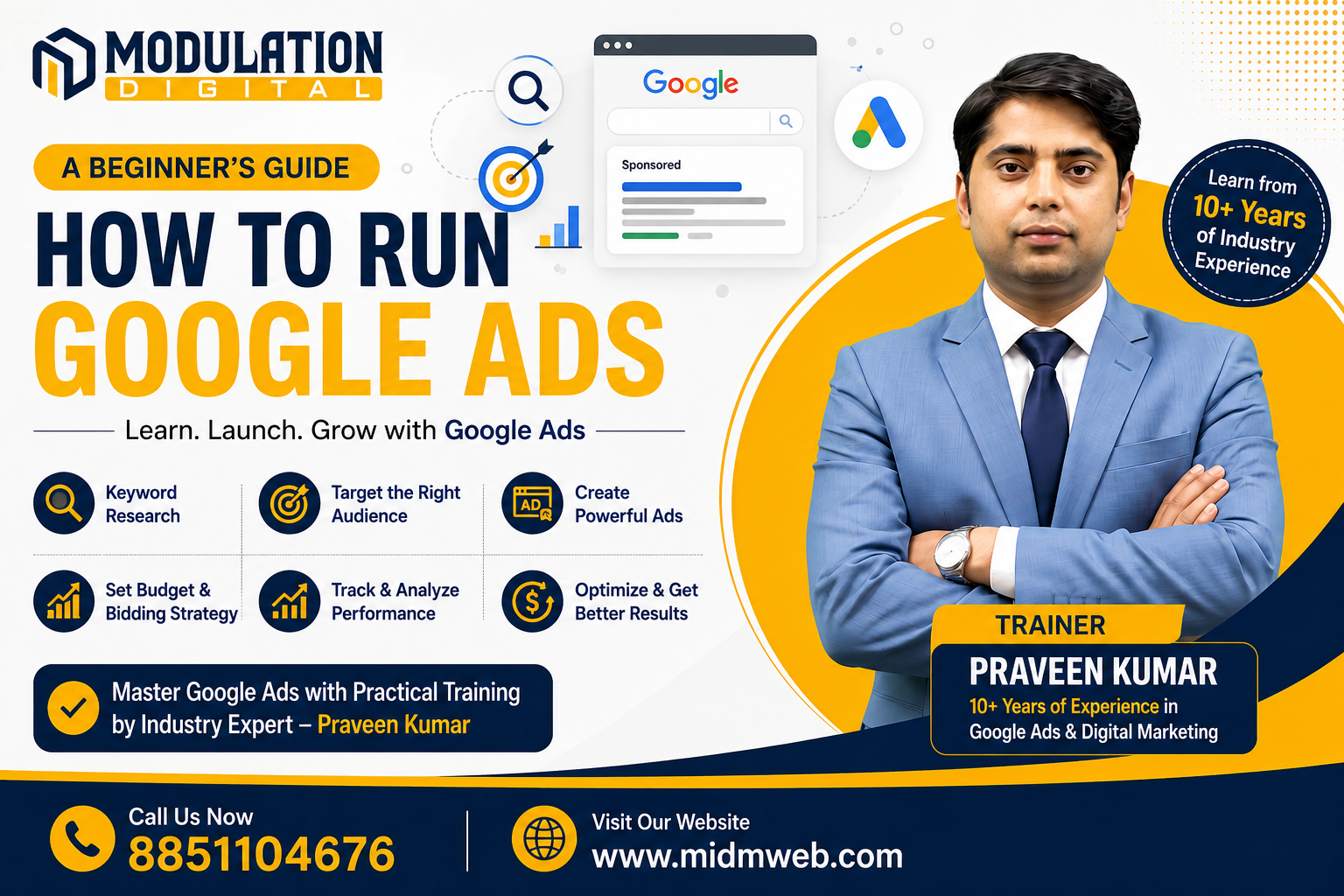
Modulation Digital is a Best digital marketing Institute in Delhi known for hands-on, practical training rather than just theory. Students set up and manage real Google Ads campaigns during their course, learning through actual budget allocation and performance tracking instead of just slides.
Meet Your Trainer – Praveen Kumar
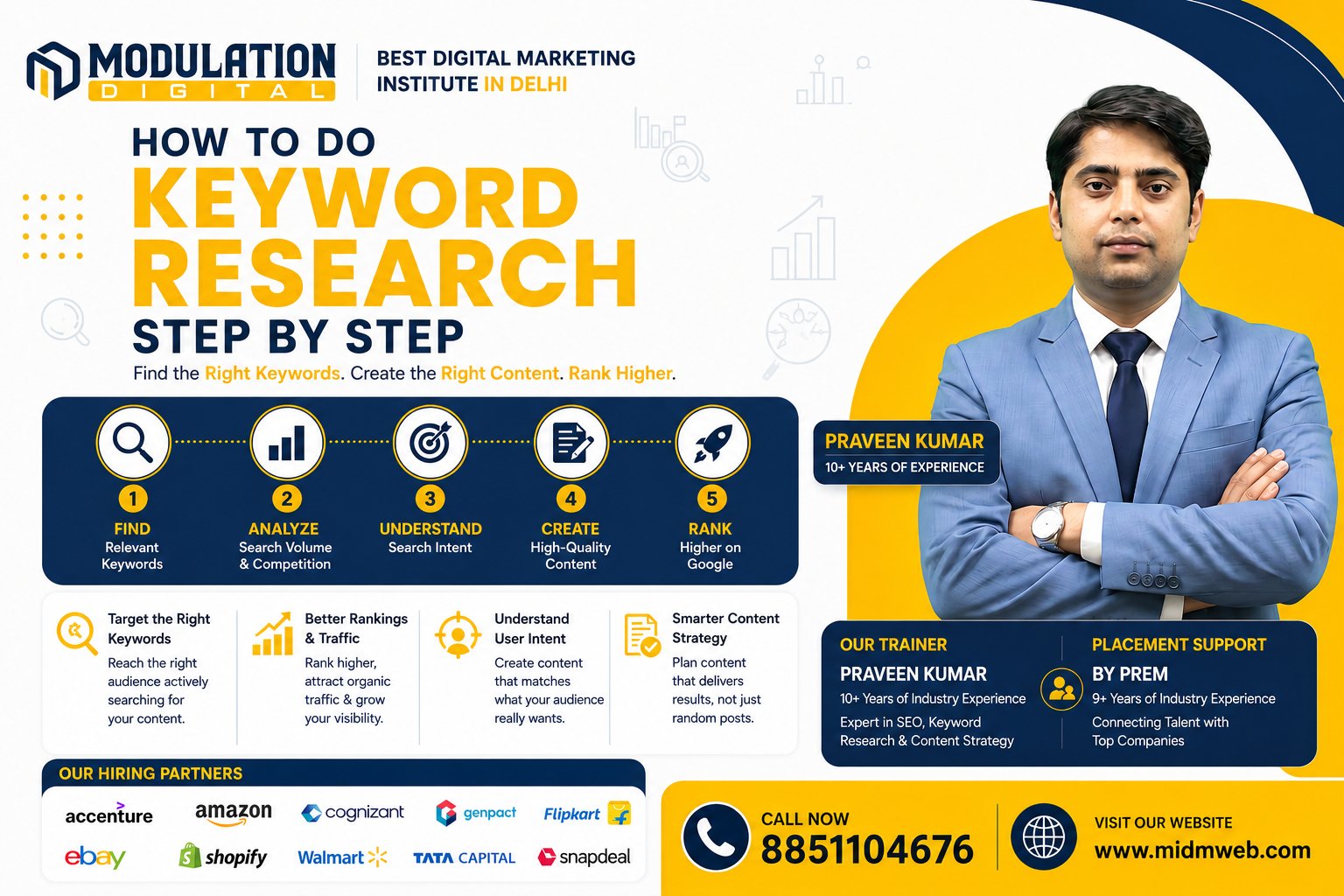
Leading Google Ads and digital marketing training at this Best digital marketing Institute in Delhi is Praveen Kumar, who brings over 10 years of industry experience running paid campaigns across search, display, and shopping formats. His approach focuses on walking students through live campaign setups, so they understand not just how to click through the interface, but why each decision affects performance.
Frequently Asked Questions (FAQs)
1. Do I need a big budget to start with Google Ads? No, many beginners start with a modest daily budget to test and learn before scaling up once they see what works.
2. How is Google Ads different from SEO? Google Ads offers immediate, paid visibility, while SEO builds organic rankings over time without direct payment per click.
3. What is the minimum amount I can spend on Google Ads? There's no strict minimum, though very small budgets may limit how much data you can gather to optimize campaigns effectively.
4. How quickly can I see results from Google Ads? Traffic can start almost immediately after launch, though meaningful performance data usually takes at least a few days to a couple of weeks.
5. What are negative keywords, and why do they matter? Negative keywords prevent your ad from showing for irrelevant searches, helping avoid wasted clicks and budget.
6. Can small businesses compete with larger companies on Google Ads? Yes, since Quality Score and relevance matter alongside bid amount, smaller businesses can still perform well with focused, well-optimized campaigns.
7. Is Google Ads certification necessary to run campaigns? It's not mandatory, but it demonstrates structured knowledge and can be valuable for anyone pursuing a digital marketing career.
8. What happens if I don't set a daily budget limit? Google Ads always requires a budget setting, which prevents unlimited, uncontrolled spending on a campaign.
9. Can I pause a Google Ads campaign anytime? Yes, campaigns can be paused or resumed at any time without losing previous performance data.
10. Do Google Ads only work for e-commerce businesses? No, service-based businesses, local shops, and even B2B companies commonly use Google Ads effectively for lead generation.
11. What's the difference between Search Ads and Display Ads? Search Ads target people actively searching for something, while Display Ads focus more on visual brand visibility across websites.
12. How do I know which keywords to target for my ads? Keyword research tools help identify what your potential customers are actually searching for, matching ad targeting to real demand.
13. Should beginners manage Google Ads themselves or hire an expert? Learning the basics yourself is valuable, even if you eventually work with an expert, since it helps you understand and evaluate performance.
14. What is a landing page, and why does it matter for Google Ads? It's the page users reach after clicking your ad — a mismatched or weak landing page can waste ad spend even with a great ad itself.
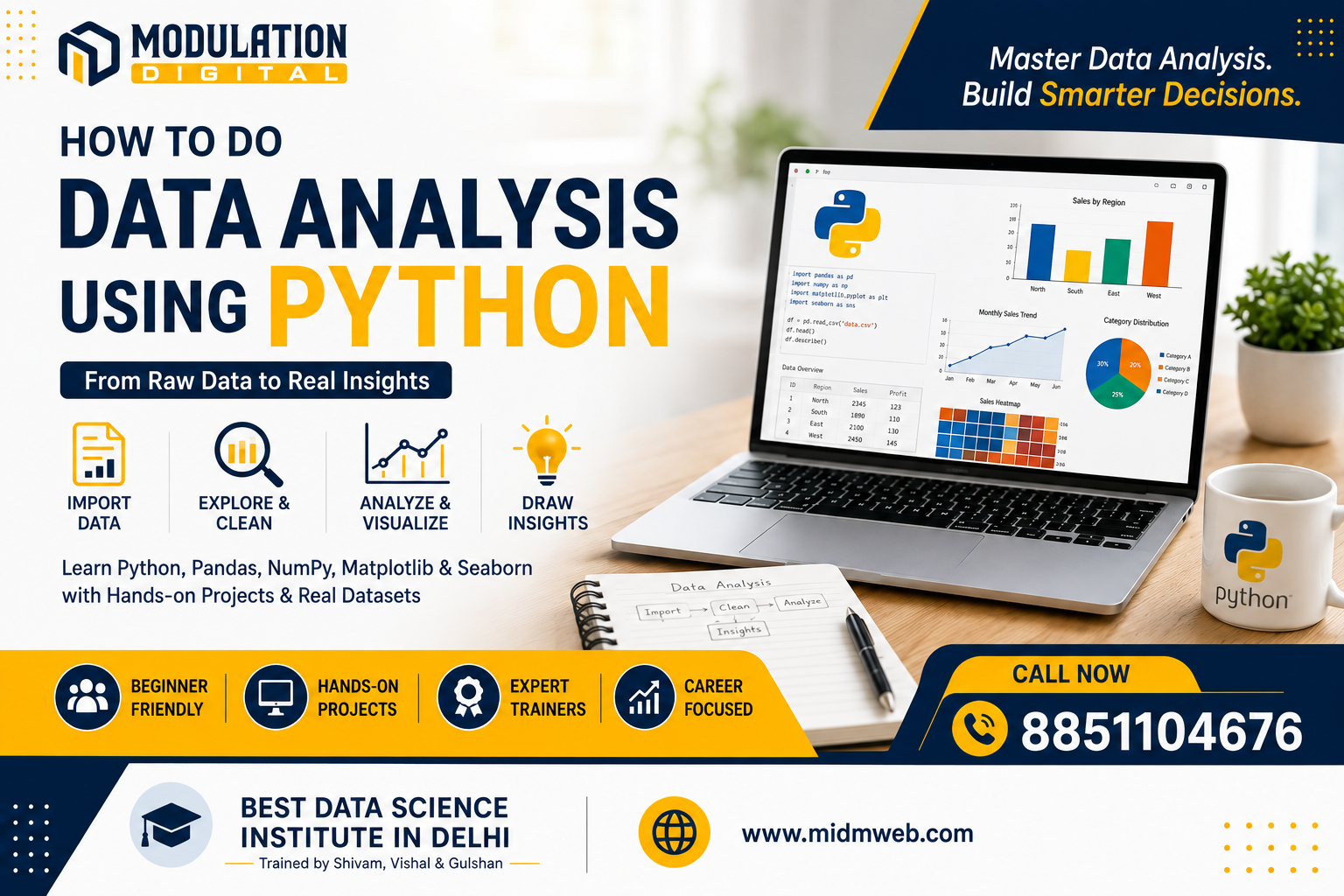
15. Once I understand advertising, how do I make sense of the data these campaigns generate? That comes down to analyzing performance data properly — a skill covered in more depth in our other guide: How to Do Data Analysis Using Python
Conclusion
Learning how to run google ads properly comes down to understanding a few core building blocks — campaign types, bidding, budgeting, and tracking — rather than just clicking through Google's interface randomly. Getting these fundamentals right early saves both money and frustration down the line. If you're ready to learn this hands-on, Modulation Digital, a trusted Best digital marketing Institute in Delhi, offers structured training under Praveen Kumar's guidance, walking students through real campaign setups from start to finish. Reach out today to book a free counselling session.